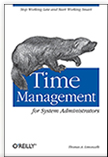
Tom interviewed about Time Management on ITBusiness.ca

Tom spoke at the IT360 conference in Toronto earlier this week. While there, ITBusiness.ca interviewed him about time management techniques for system administrators. Read the interview with Tom Limoncelli here.

Happy April Fools Day

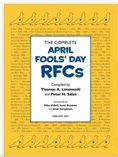
"The Complete April Fools RFCs" is now available on Think Geek. Pick up your copy today!

Do you speak a rare language?

Do you speak a language that is outside of the usual "top 40" languages spoken internationally? More importantly, do you know the locale-specific issues like how date ranges are written (May 3-5, 2008)?

You may have heard of Unicode, the replacement for ASCII that lets you type in hundreds of languages. Did you know that the same organization maintains the Common Locale Data Repository, which includes machine-readable definitions of how dates are represented, words are sorted, and so on. The latest update is going to attempt to include even more attributes: not just the date format, but the format for date ranges; not just how to alphabetize words, but the alternate sorting rules used in that country's phone book, ...

The Unicode CLDR Project has set up a web site where people can review their current data and submit updates.

I think it is great that they are opening the project and searching for volunteers. A project like this can only be done with the power of the open web.

The project's homepage: http://unicode.org/cldr/

Anyone can view the data. You only need to create an account to report updates or make suggestions.

If you are interested in what kind of bugs are being reported, view the recent submissions here.

If you know a particular language or culture very well, please volunteer!

My apology to Rob Glenn and Stephen Kent

The Complete April Fools RFCs (edited by myself and Peter H. Salus) includes one RFC that, it turns out, was not a joke. The book reprints all the April Fools and various "funny" RFCs and includes commentary not available online. And, err, umm... we recently learned that it includes on RFC that was not meant to be funny at all. We apologize if this has created any confusion.

Continue reading "My apology to Rob Glenn and Stephen Kent"

Are you ready for April Fools Day?

April Fools Day is only 2 weeks away. I've seen some well-executed pranks played at work, and some that ended up in people getting fired.

The times people got fired often involved violating corporate policies, such as forging email from important people. I once saw a person forge email from a manager... oh, I won't finish the story, that's enough of a "no no" at most companies. Of course, if they had warned the manager he could have been involved and it would have been even funnier.

We once convinced a manager to email out a new data storage policy: Since the voice mail system deletes messages that are more than 10 days old, why not do something similar on our NFS servers? Certainly a file that hasn't been used in 10 weeks can't be too important. Imagine how convenient it will be to have your home directory automatically cleaned this way? Most everyone thought it was funny, except one person that was very embarrassed when he took his complaint to the VP, who had a much better sense of humor.

The RFC documents that define how the internet works includes many fake documents that are hilarious. www.rfc-humor lists them all. This includes the famous RFC for how to send TCP/IP packets over carrier pigeon.

Peter H. Salus and I compiled all the funny RFCs and put them into a book. Why sell something that you can get for free online? Well, first of all we added commentary, some of which is written by famous industry folks. Secondly, it's nice to have all the RFCs in one place. It looks great on a coffee table or in your office. (Oh, and you get to see the brilliant cover design that I did.)

You can still order it in time for April 1st. Makes a perfect give for the geek that has everything. Order today!

Tom @ IT360, April 7, 2008, Toronto, CA

Two half-day tutorials, Help! Everyone Hates Our IT Department (And How To Change That) and Time Management for System Administrators will be taught by Tom Limoncelli at the IT360 Conference in Toronto, Canada, on April 7 (entire conference and Expo runs April 7-9). These presentations have received accolades when presented at other conferences. They've been updated and sharpened with new material. This is Tom's first appearance at the IT360 conference. Website: www.it360.ca (full workshop listing here)

Programming competition for East African students

Google (my employer) has announced a "Google Gadget" competition for students in Tanzania, Uganda, Kenya, Rwanda, Burundi and Ethiopia. The designer of the best gadget will a $600 USD stipend, five runners-up will receive a $350 USD stipend. Prize categories include Best Gadget UI, Best Local Content Gadget (Most Locally Useful Gadget), Best Education Specific Gadget, Best Procrastination Gadget, Most Technically Sophisticated Gadget, Gadget Most Likely to Get International Traffic, and Best Social Gadget.

Complete details are available on the East Africa Google Gadget Competition website. A PDF suitable for your university bulletin board is available here.

HostDB 1.002 released!

A few years ago I released HostDB, my simple system for generating DNS domains. The LISA paper that announced it was called: HostDB: The Best Damn host2DNS/DHCP Script Ever Written.

I just released 1.002 which adds some new features that make it easier to generate MX records for domain names with no A records, and not generate NS records for DNS masters. Other bug fixes and improvements are included.

HostDB is released under the GPL, supported on the HostDB-fans mailing list, and supported by the community. This recent release includes patches contributed by Sebastian Heidl.

HostDB 1.002 is now available for download.

Technology marches on

Ten years ago I built a music player out of a PC and other stuff that was 4U big, cost thousands (if I used new parts) and could hold as many songs as my cigarette-pack sized iPod can store today for a few hundred bucks.

Thanks to Moore's Law, just about any thing you build today can be done on something the size of an iPod, you just have to wait long enough. What year will an entire SAP deployment be the size of an iPod? What year will an entire service like gmail be the size of an iPod? What year will a PeopleSoft installation be the size of an iPod? An entire Remedy helpdesk ticket system iPod?

In that year... will someone want to pay $millions for an equivalent PeopleSoft installation when it is on an iPod? I doubt it. Would PeopleSoft be able to stay in business selling an iPod-priced device? I doubt it. So will this kind of innovation come from an outside competitor? I'd assume so... just like phone companies couldn't make the leap to VoIP and were instead put out of business by the likes of Cisco.

I wonder if prior to complete (for example) PeopleSoft iPods, there will be a generation of single-function bricks that are connected via standard interfaces. You buy a database brick, a core IT services (DNS, authentication, ActiveDir/LDAP) brick, and a PeopleSoft app brick; and they provide the service together. Sort of like legos.

What app will be on your brick?

Tom @ LOPSA-NJ, Feb 7, 2008, Princeton, NJ

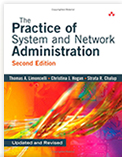
Tom will be the invited speaker at LOPSA-NJ on February 7th, 2008. His topic is "Is SaaS the end of system administration?". Tom will also talk about the 2nd edition of TPOSANA and the April Fools RFC book.